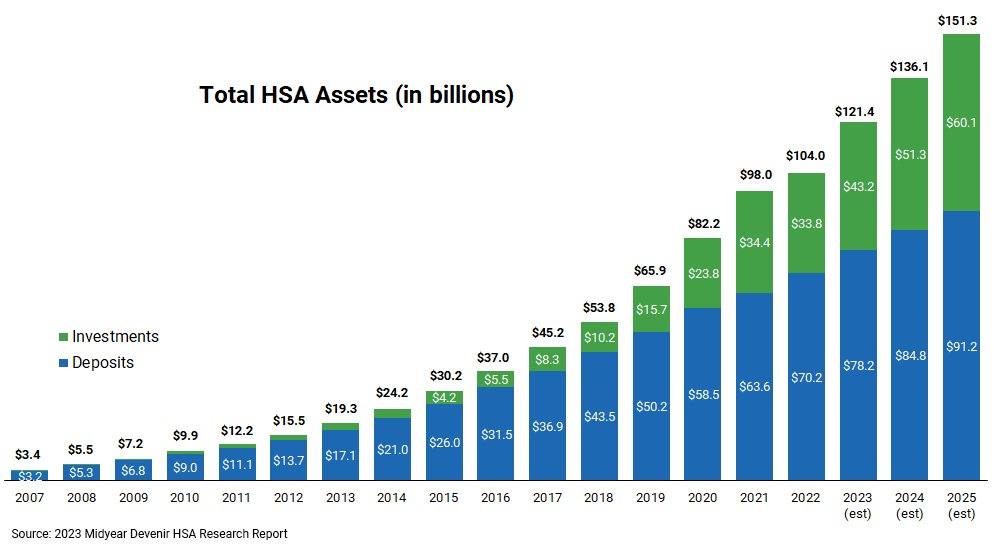
Imagine a financial tool so powerful it's often called a "stealth IRA" – one that lets your money grow tax-free, be spent tax-free on healthcare, and even convert into flexible retirement income later in life. This isn't a fantasy; it's the reality of a Health Savings Account (HSA), and its strategic use in retirement is a cornerstone of smart financial planning. Far from being just another savings vehicle for medical bills, a well-managed HSA can become a significant pillar of your future financial security, offering a unique blend of tax advantages and flexibility unmatched by almost any other account.
At a Glance: Your HSA Retirement Power-Up
- Triple Tax Advantage: Contributions are tax-deductible, investments grow tax-free, and qualified withdrawals are tax-free. It's a hat trick for your money.
- HDHP Required: To contribute, you must be enrolled in a High-Deductible Health Plan. This isn't for everyone, but the long-term benefits can be immense.
- Investment Growth: Don't just save; invest your HSA funds. This is where the magic of compounding truly shines for retirement.
- No RMDs: Unlike IRAs and 401(k)s, HSAs have no Required Minimum Distributions, allowing your savings to grow indefinitely.
- Post-65 Flexibility: After age 65, non-medical withdrawals are taxed as ordinary income, like a traditional IRA, but without the earlier 20% penalty.
- Medicare Trap: Be aware of the retroactive Medicare enrollment rule – stop contributing at least six months before enrolling in Medicare to avoid penalties.
- Significant Savings: Medical costs in retirement are substantial. An HSA provides a dedicated, tax-advantaged fund to cover them, potentially freeing up other retirement assets.
Understanding the HSA Advantage: More Than Just a Savings Account
At its core, a Health Savings Account is a specialized savings and investment vehicle designed to help you pay for qualified medical expenses. But to view it solely through that lens is to miss its extraordinary potential as a retirement asset. Its unique structure offers a "triple tax advantage" that sets it apart:
- Tax-Deductible Contributions: The money you put into an HSA reduces your taxable income in the year you contribute, just like a traditional IRA. This means immediate tax savings.
- Tax-Free Growth: Once your contributions are invested within the HSA (and many providers offer a robust selection of investment options), any earnings – whether from dividends, interest, or capital gains – grow entirely tax-free.
- Tax-Free Withdrawals: The real showstopper: when you withdraw funds from your HSA to pay for qualified medical expenses, those withdrawals are also completely tax-free. This includes everything from doctor visits and prescription medications to dental work, vision care, and even certain long-term care insurance premiums.
This powerful combination creates an incredibly efficient way to save for future healthcare costs, which, as we’ll explore, are likely to be far greater than you imagine.
To qualify for an HSA, you must be enrolled in a High-Deductible Health Plan (HDHP). For 2026, an HDHP requires a minimum deductible of $1,700 for individuals and $3,400 for families. The maximum out-of-pocket expenses are capped at $8,500 for individuals and $17,000 for families. These thresholds change annually, so it's essential to confirm the current figures. If you have any "first-dollar" coverage (meaning your plan pays for anything before the deductible is met, outside of preventive care), you generally won't qualify for an HSA. This makes the HDHP a critical gateway to unlocking the HSA's retirement benefits.
The IRS sets annual limits on how much you can contribute. For 2026, individuals with self-only HDHP coverage can contribute up to $4,400, while those with family HDHP coverage can contribute $8,750. If you’re age 55 or older, you get an additional "catch-up" contribution of $1,000, bringing your potential annual savings even higher. These limits reset each year, often with inflation adjustments, so consistently maximizing them over your working life can build a substantial nest egg.
The "Stealth IRA" Unveiled: Why HSAs Shine in Retirement
The true brilliance of an HSA in a retirement context becomes apparent after you turn 65. Before this age, using HSA funds for non-medical expenses incurs both income tax and a stiff 20% penalty. However, once you hit 65, that 20% penalty vanishes.
This transformation is what truly earns the HSA its "stealth IRA" moniker. After age 65, withdrawals for non-medical expenses are treated just like distributions from a traditional IRA or 401(k): they're taxed as ordinary income. But here's the kicker: withdrawals for qualified medical expenses still remain completely tax-free, regardless of your age. This means your HSA essentially becomes a hybrid account in retirement: a dedicated, tax-free fund for medical bills, and a flexible, taxable income stream if you're fortunate enough to have more money than you need for healthcare.
Another powerful differentiator from traditional retirement accounts like IRAs and 401(k)s is that HSAs have no Required Minimum Distributions (RMDs). This is a massive advantage. Your funds can continue to grow, unmolested by mandatory withdrawals, for as long as you live. This makes HSAs an excellent tool for legacy planning, as you can pass on the accumulated wealth to your heirs, who will then pay income tax on non-qualified distributions. The ability to let your money compound for decades, without the IRS forcing your hand, is a gift to your future self.
Finally, the power of investment growth cannot be overstated. An HSA isn't just a basic savings account. Most HSA providers offer a wide range of investment options, including mutual funds, exchange-traded funds (ETFs), and fixed-income assets. By investing your contributions early and letting them compound over decades, you can turn modest annual contributions into a significant retirement fund. Many people miss this crucial step, leaving their HSA funds in low-interest cash accounts, thus squandering the potential for substantial tax-free growth. Don't be one of them.
Strategic Moves: How to Maximize Your HSA for Retirement
To truly leverage your HSA as a retirement powerhouse, a deliberate strategy is key. It's not enough to simply open an account; you need to cultivate it.
Fund It, Don't Spend It: The "Pay-as-You-Go" Strategy
The most impactful strategy for building a robust retirement HSA is counterintuitive for many: pay your current medical expenses out-of-pocket and let your HSA grow untouched. This is often referred to as the "receipt reimbursement" strategy.
Here's how it works: you pay for your medical costs today with cash, a credit card, or funds from a separate emergency savings account. Crucially, you meticulously save every receipt for those qualified medical expenses. Since HSA funds can be withdrawn tax-free at any point in the future for any qualified medical expense incurred since the account was opened, you can effectively let your HSA grow for decades. Then, in retirement, when you need supplemental income or face significant medical bills, you can reimburse yourself tax-free for all those past expenses you’ve documented. Imagine having a "super fund" that has grown tax-free for 20-30 years, and then pulling out tens or hundreds of thousands of dollars, completely tax-free, against receipts from years ago. This strategy requires discipline and sufficient cash flow to cover immediate medical costs, but the payoff in retirement can be enormous.
Invest Early and Aggressively: Leveraging Compound Growth
As mentioned, an HSA should be an investment vehicle, not just a savings account. Once you have a sufficient cash buffer (e.g., $1,000-$2,000) within your HSA for immediate, unexpected medical needs, invest the rest. For those years or decades away from retirement, a more aggressive investment strategy, focused on equities through diversified mutual funds or ETFs, is often appropriate.
Think of it this way: every dollar you invest today has the potential to become many dollars in the future. Because this growth is tax-free, it compounds faster than in a taxable brokerage account. Don't let your HSA sit idle in cash. Research your HSA provider's investment options, understand their fees, and choose an allocation that aligns with your time horizon and risk tolerance.
Document Everything: The Importance of Keeping Medical Expense Receipts
This cannot be stressed enough if you’re employing the receipt reimbursement strategy. For every out-of-pocket medical expense you pay, keep detailed records. This includes:
- Dates of service
- Description of the service or product (e.g., "dental cleaning," "prescription eye drops")
- Amount paid
- Proof of payment (e.g., explanation of benefits (EOB) from your insurer, receipts from providers, credit card statements).
You can scan and store these digitally in a well-organized folder, or keep physical copies. The IRS does not require you to submit these receipts with your tax return, but you must be able to produce them if audited. Without proper documentation, future withdrawals for past expenses could be deemed non-qualified and subject to income tax and potential penalties.
Pre-Retirement Accumulation: Building a Significant Fund
Consider Fidelity's estimate that a 65-year-old couple retiring in 2024 will need approximately $157,500 (after tax) to cover healthcare expenses throughout retirement. This staggering figure doesn't even include potential long-term care costs. This illustrates precisely why maximizing your HSA contributions and allowing them to grow tax-free is such a critical component of retirement planning.
By consistently contributing the maximum allowed each year, especially taking advantage of the catch-up contributions after age 55, you can build a formidable war chest specifically designed to combat these escalating costs. This takes the pressure off your other retirement accounts, like your 401(k) or IRA, which can then be used for discretionary spending, travel, or other lifestyle needs.
Navigating Potential Pitfalls and Complexities
While HSAs offer incredible advantages, they aren't a universal solution. Understanding the potential downsides and administrative intricacies is crucial.
Is an HSA Right for You?
The fundamental requirement of an HDHP means that HSAs aren't suitable for everyone. If you have significant, regular medical needs or chronic conditions that require frequent doctor visits and expensive prescriptions, a high deductible might be too burdensome. You'd be responsible for paying substantial out-of-pocket costs before your insurance kicks in, which could quickly deplete your emergency savings or cause financial strain.
Additionally, if you don't have a robust emergency fund to cover your HDHP deductible, you might struggle to employ the "pay-as-you-go" strategy, forcing you to use your HSA for current expenses and diminishing its long-term growth potential. Before committing to an HDHP and an HSA, it's wise to weigh the potential immediate financial impact against the long-term retirement benefits. For a deeper dive into making this personal decision, you might find our guide on Weighing HSA pros and cons particularly helpful.
The Medicare Enrollment Trap
This is one of the most common and costly mistakes individuals make with their HSAs. Once you enroll in any part of Medicare (Part A, B, C, or D), you are no longer eligible to contribute new money to an HSA. The funds you've already accumulated remain yours to use, but new contributions cease.
The critical trap lies in Medicare Part A. Many people automatically enroll in Medicare Part A when they turn 65, even if they continue working and are covered by an employer's health plan. This is because Part A is often premium-free. However, Part A coverage can be retroactive up to six months from your enrollment date. If you're still contributing to an HSA during this retroactive period, the IRS could penalize you for excess contributions.
The actionable insight: To avoid this penalty, you must stop contributing to your HSA at least six months before you plan to enroll in Medicare, or at least six months before your 65th birthday if you plan to enroll at that time. Plan this transition carefully with your HR department and Medicare enrollment counselors.
Early Withdrawals (Before 65): The 20% Penalty
Using your HSA for non-qualified expenses before age 65 comes with a steep price: not only will the withdrawal be subject to ordinary income tax, but it will also incur a 20% penalty. This is a significant deterrent and reinforces the importance of using your HSA as a dedicated, long-term healthcare savings vehicle. Resist the urge to tap into these funds early unless it's for a qualified medical expense.
Spousal & Family Considerations
If you have family HDHP coverage, you can contribute up to the family limit. If both spouses have HDHP coverage, they can each open an HSA and contribute up to the individual limit, plus their individual catch-up contributions if applicable, but their combined contributions cannot exceed the family limit. Coordinating contributions between spouses is important to maximize savings without exceeding IRS limits. After one spouse enrolls in Medicare, they cannot contribute, but the other spouse, if still HSA-eligible, can continue to contribute to their own HSA.
Estimating Your Future Healthcare Costs: Why the HSA Matters
The statistics on healthcare costs in retirement are sobering. Fidelity's 2024 estimate of $157,500 for a 65-year-old couple's out-of-pocket medical expenses is a starting point, and that figure doesn't account for unique health conditions, expensive new treatments, or the escalating costs of long-term care.
Consider what these costs typically entail:
- Medicare Premiums: Even with Medicare, you'll pay premiums for Part B (medical insurance), Part D (prescription drug coverage), and potentially a Medigap policy or Medicare Advantage plan. These can easily amount to hundreds of dollars per month per person.
- Deductibles and Co-pays: Medicare, like most insurance, has deductibles and co-pays that you'll be responsible for.
- Prescription Drugs: While Part D helps, many medications still have significant out-of-pocket costs, especially for specialty drugs.
- Dental, Vision, and Hearing: Original Medicare generally doesn't cover routine dental, vision, or hearing care, which can be costly as you age. An HSA is perfect for these expenses.
- Over-the-Counter Items: Many everyday health items, from pain relievers to first-aid supplies, are qualified medical expenses.
- Long-Term Care: This is the elephant in the room. Custodial care in a nursing home, assisted living facility, or even extensive home health care can quickly drain traditional retirement savings. While HSAs can pay for qualified long-term care services and certain long-term care insurance premiums, the sheer cost often requires dedicated long-term care planning beyond just an HSA.
Given these realities, a fully funded HSA can be a powerful antidote to anxiety about retirement healthcare. It means you won't have to choose between crucial medical care and your ability to live comfortably or pass on a legacy.
Beyond Medical: The Ultimate Financial Flexibility
While the primary role of an HSA is to cover medical expenses, its post-65 flexibility means it can serve as a versatile financial safety net.
If you are fortunate enough to have accumulated significant wealth in your HSA and have relatively low medical expenses in retirement (perhaps you have excellent employer-sponsored retiree health benefits or simply remain remarkably healthy), your HSA can pivot to become a general retirement income supplement. Any withdrawals for non-medical expenses will be taxed as ordinary income, similar to a traditional IRA distribution. This gives you another source of flexible income, should you need it, complementing your 401(k), IRA, and Social Security.
Furthermore, HSAs offer unique advantages in estate planning. Unlike traditional IRAs, which are subject to RMDs and often become part of an estate quickly, an HSA can continue to grow. If your spouse is the beneficiary, they can treat it as their own HSA, continuing the tax-free growth and withdrawals. If another non-spouse individual inherits it, it's generally no longer an HSA but rather taxable income to the beneficiary, though medical expenses of the decedent paid within one year can be reimbursed tax-free. This offers some flexibility for passing on wealth while potentially offsetting future medical costs for your beneficiaries.
Key Questions Answered
Addressing common queries can help solidify your understanding of this powerful financial tool.
"Can I contribute to an HSA if I'm on Medicare?"
No, you cannot contribute new money to an HSA once you are enrolled in any part of Medicare (A, B, C, or D). You can, however, continue to use your existing HSA funds tax-free for qualified medical expenses, even after enrolling in Medicare. This includes Medicare premiums (except for Medigap premiums, which are generally not qualified expenses for HSA withdrawals), deductibles, co-pays, and prescriptions.
"What happens to my HSA when I die?"
If your spouse is the named beneficiary, they can take ownership of the HSA and treat it as their own, continuing to use it for qualified medical expenses with all the same tax advantages. If a non-spouse individual inherits the HSA, it ceases to be an HSA as of the date of death and the fair market value is generally included in their gross income for tax purposes. However, the beneficiary can deduct any qualified medical expenses incurred by the decedent that were paid within one year after the date of death, provided those expenses were not previously reimbursed.
"How do I prove medical expenses for tax-free withdrawals?"
You must keep detailed records of all qualified medical expenses you've paid out-of-pocket since your HSA was established. This includes receipts, Explanation of Benefits (EOB) statements from your insurer, and invoices from medical providers. While you don't submit these to the IRS annually, you must be able to produce them if your tax return is audited. Digital records are often the easiest to organize and retrieve.
"Is there a maximum balance for an HSA?"
No, unlike other tax-advantaged accounts, there is no maximum balance limit for an HSA. You can contribute and invest funds indefinitely, allowing your balance to grow as large as your contributions and investment returns allow. This lack of an upper limit further enhances its utility as a long-term retirement savings vehicle.
Your Next Steps: Building a Health-Conscious Retirement Plan
The strategic use of HSAs in retirement is not a passive endeavor. It requires conscious planning and consistent effort. If you're currently in an HDHP, maximize your contributions and invest those funds. If you're not in an HDHP, consider if switching to one aligns with your health and financial situation, especially if you're relatively healthy and have an emergency fund.
Here are concrete actions you can take:
- Assess Your Current Health Plan: Understand if you're eligible for an HSA now. If not, explore HDHP options during your next open enrollment period.
- Maximize Contributions: Aim to contribute the maximum allowed by the IRS each year, including the catch-up contribution if you're 55 or older.
- Invest Your Funds: Don't let your HSA sit in cash. Research your provider's investment options and choose a diversified portfolio aligned with your long-term goals.
- Adopt the "Receipt Reimbursement" Strategy: If feasible, pay current medical expenses out-of-pocket and diligently save all your receipts. Let your HSA grow.
- Plan for Medicare Enrollment: Carefully map out your Medicare enrollment timeline, ensuring you stop HSA contributions at least six months prior to avoid the retroactive enrollment trap.
- Consult a Fee-Only Fiduciary Financial Advisor: Healthcare costs are a complex part of retirement. A professional who works solely in your best interest can help you integrate an HSA seamlessly into your broader financial plan, considering your unique health profile, risk tolerance, and retirement goals.
An HSA is more than just a place to stash money for the doctor. It's a powerful, flexible, and tax-efficient financial instrument that, when used strategically, can profoundly impact your financial well-being and peace of mind in retirement. Don't underestimate its potential; start leveraging it today for a healthier, wealthier tomorrow.